Santander
Helping customers do more with their money
OVERVIEW
As Product Design Lead at Santander, I played a pivotal role in shaping the organisation’s approach to design, driving both strategic initiatives and hands-on improvements. My work spanned multiple facets of design leadership, from facilitating workshops and mentoring junior staff to embedding new workflows and influencing senior stakeholders.
A key focus of my role was advocating for the value of design within the business, ensuring that design principles were integrated into strategic decision-making. I worked closely with leadership to develop a long-term design strategy while also implementing tactical solutions to immediate challenges.
Through training sessions, hands-on teaching, and process improvements, I fostered a culture of design awareness and collaboration across teams.
By introducing new workflows, streamlining design processes, and raising awareness of best practices, I helped enhance efficiency and impact across the organisation. This case study focuses on one of the initiatives I led, the challenges I addressed, and the outcomes that contributed to a more design-driven approach within the bank.
The Problem
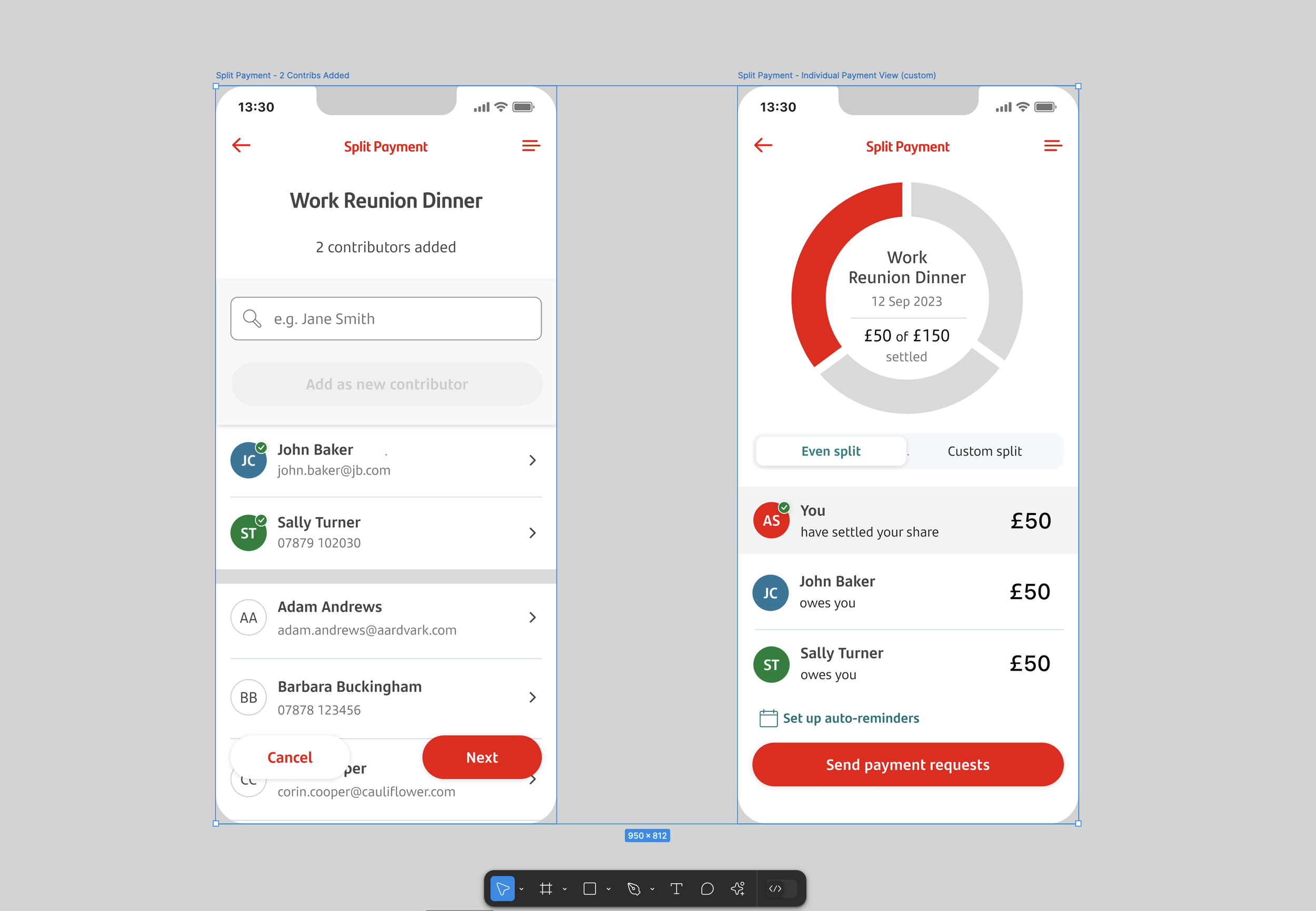
Managing shared expenses, whether for dining out, rent, or group activities, has long been a challenge for mobile banking users. Traditional bank transfers were cumbersome, requiring users to manually calculate amounts and send multiple payments. Customers often resorted to third-party apps, leading to a fragmented user experience.
Our goal was to design a seamless Split Payments feature, allowing users to effortlessly divide and settle expenses within the banking app.
Challenges Faced
1. User Complexity – Different users had different needs; some preferred equal splits, while others required custom allocations.
2. Clarity in Transactions – Ensuring that both payers and recipients had a clear view of payment requests and statuses.
3. Stakeholder Alignment – Convincing internal teams of the feature’s value and securing development resources.
4. Regulatory Considerations – Ensuring compliance with banking regulations and payment security protocols.
5. Integration with Existing Systems – The need to integrate smoothly with the bank’s existing transaction processing infrastructure.
The Design Process
Research & Discovery
● Conducted user interviews and surveys to understand pain points with existing payment methods.
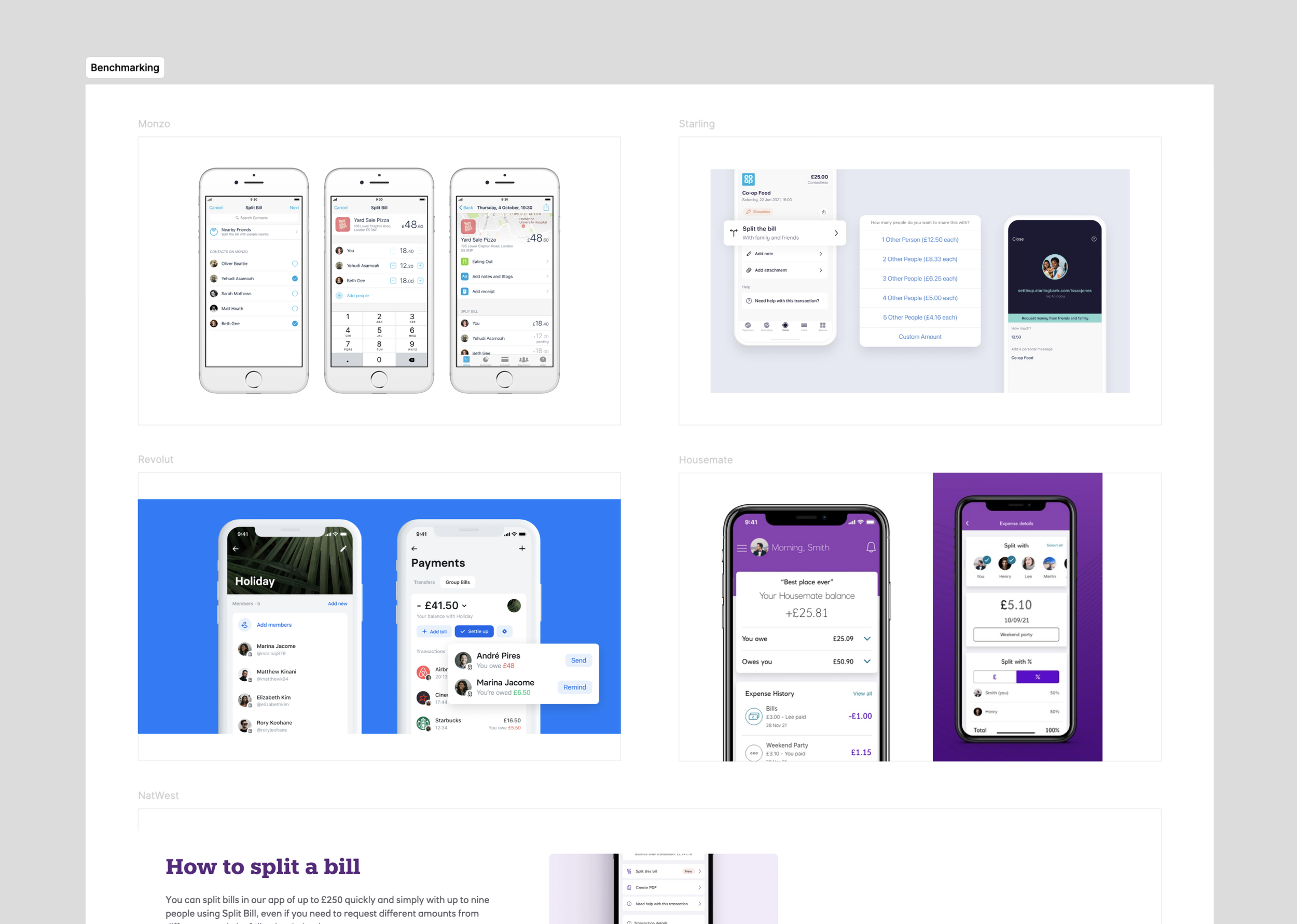
● Benchmarked against competitors and third-party payment apps to identify best practices and areas for differentiation.
Ideation & Prototyping
● Held workshops with product managers, engineers, and customer support to map out user flows.
● Explored multiple UX concepts through wireframing and prototyping.
● Tested interactive prototypes with users to gather feedback on clarity and usability.
Iteration & Refinement
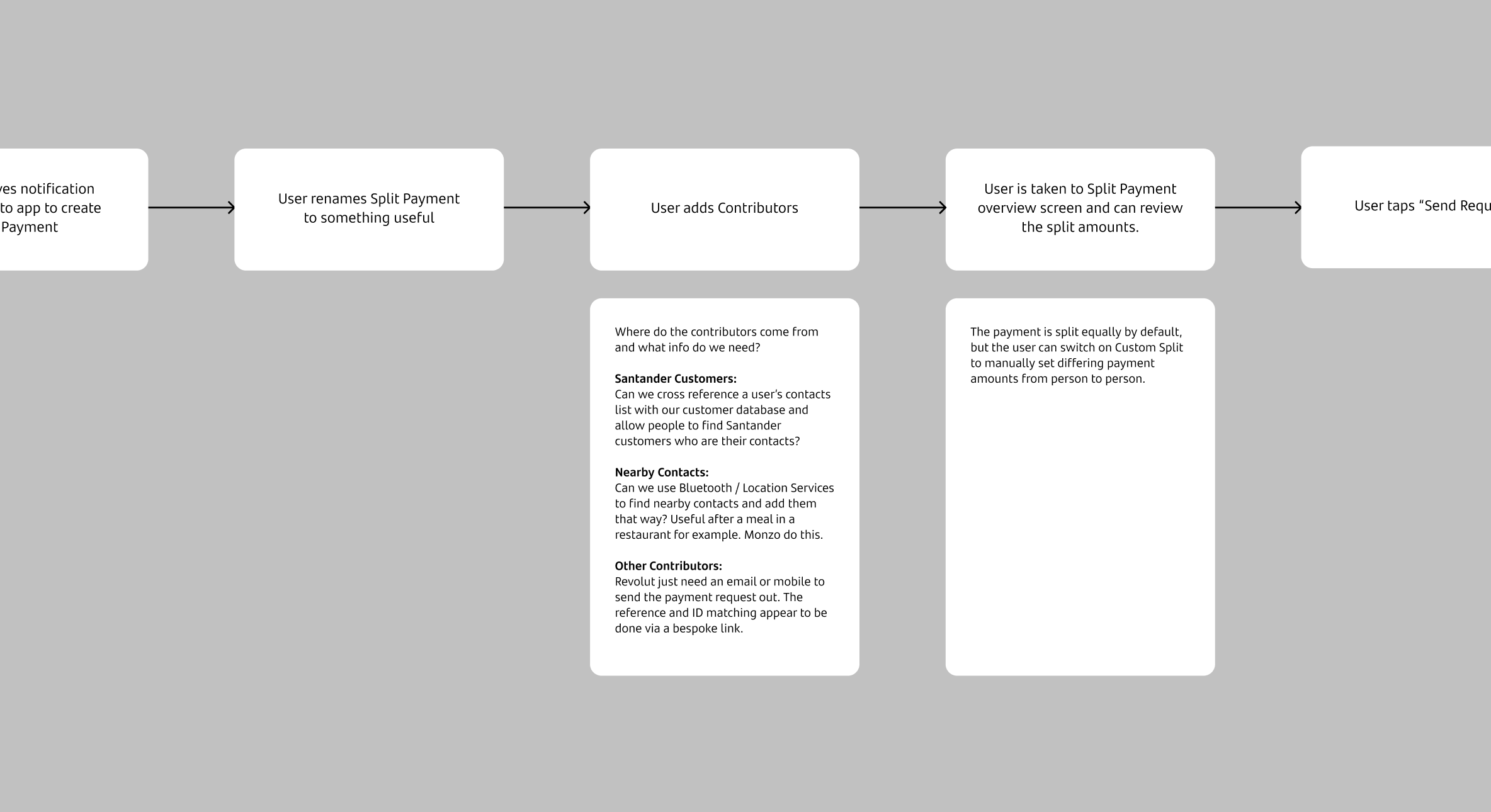
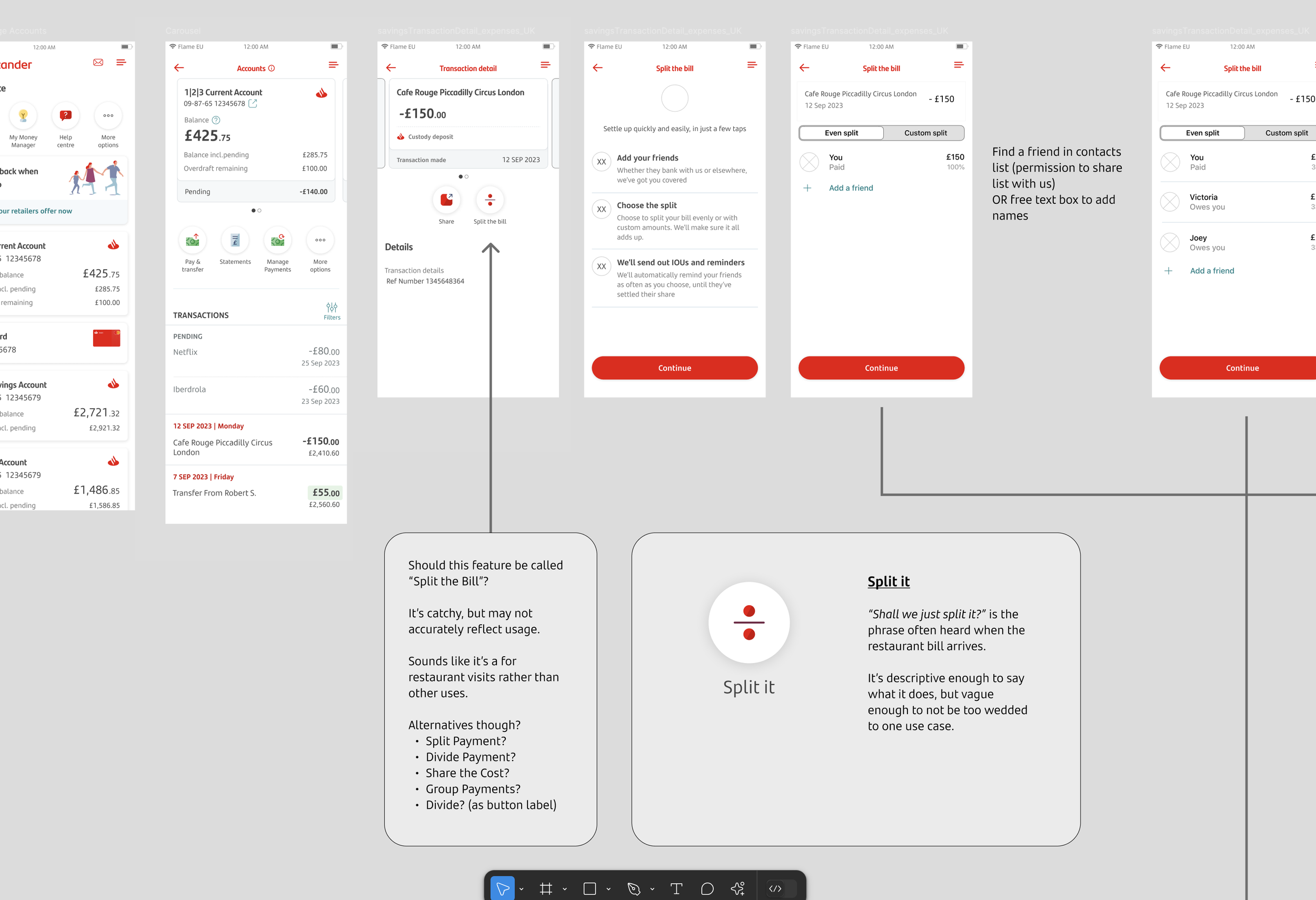
● Based on user feedback, we streamlined the process into three simple steps: select contacts, set amounts, and send.
● Designed smart reminders for pending payments to reduce friction in follow-ups.
● Implemented transaction transparency, allowing all participants to track payments in real-time.
● Collaborated with legal and compliance teams to address security concerns.
Development & Implementation
● Partnered with engineering to ensure a smooth API integration for real-time payments.
● Created a design system component for consistency across the app.
● Developed and tested the feature in beta ready for full rollout.
The Outcome
● User Engagement – 52% of tested users said they would use the feature if it was added to the app in future.
● Potential for Higher Retention Rates – Users were 25% more likely to continue using the banking app for peer-to-peer transactions if released.
● Predicted Reduction in Customer Support Queries – 40% of respondants said they thought they’d be less likely to complain about manual transfers and payment tracking if the feature was available.
● Positive Customer Feedback – 85% of surveyed users predicted that the feature would improve their banking experience.
“Alex played a pivotal role in driving both strategic initiatives and hands-on improvements, demonstrating exceptional design leadership. His contributions spanned workshop facilitation, mentoring junior staff, and embedding new workflows, all while effectively influencing senior stakeholders.
He worked closely with leadership to shape a long-term design strategy while also delivering tactical solutions to immediate challenges.
Through training sessions, hands-on teaching, and process improvements, Alex fostered a strong culture of design awareness and collaboration, streamlining workflows and enhancing overall efficiency.
Very proud to have had you as part of the team that drove this Alex Suermondt 👏”
— Andrew Eyles, Senior Manager UX & Design, Santander.